The problem
Reinforcement learning is easy to describe and hard to trust. The question wasn't only whether the score goes up, but whether the gain is real or noise.
What I did
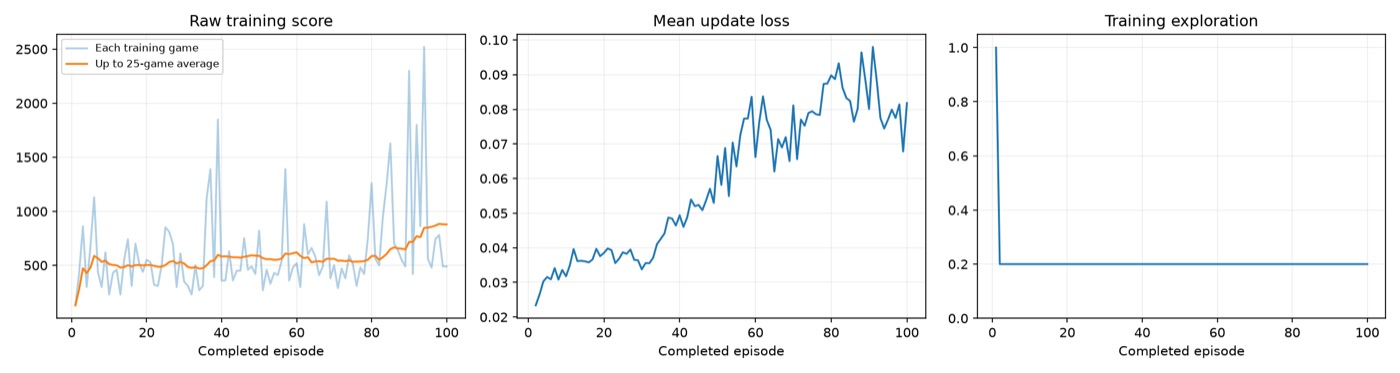
- Chose three settings and justified each: 100 episodes, exploration held at 0.20 as a control, and a learning rate 2.5x the reference so change would show up in a short run.
- Wrote down my expectation before running: a modest gain of about 100 to 200 points.
- Trained on a laptop GPU: 57,801 decisions and 14,201 updates in about 3.3 minutes.
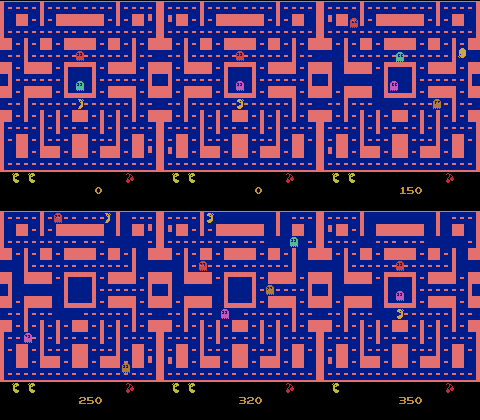
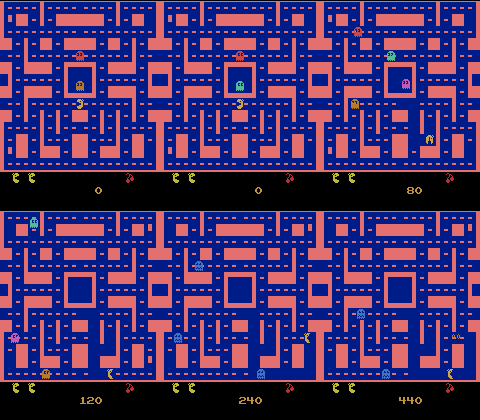
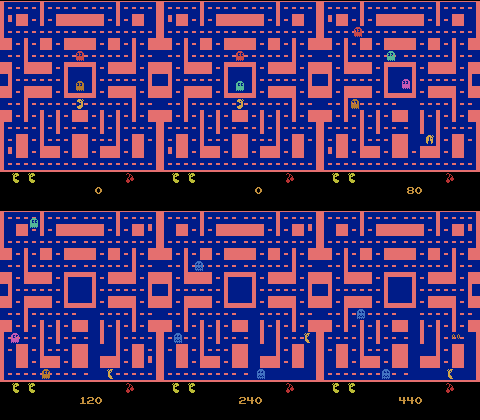
- Evaluated before and after on the same five seeds, and kept every GIF, plot, and checkpoint.
- Explained the surprise. Loss went up while scores improved, which is expected in DQN as the value targets grow.
Results
492 → 680mean evaluation score
+188inside my predicted range
4 of 5test games improved
3.3 minto train
What I'd do differently
Five test games is too few to trust the mean. One game fell from 800 to 300, and the curve was flat for 80 episodes before a late jump. Next experiment: change only the episodes, from 100 to 500, to see whether the gain holds or was a lucky streak.
Artifacts
Notebook and evidence on GitHub ↗