The problem
You're already sick, and you don't know when the fever will strike again. Was it a sudden spike or a slow climb? By the time you notice, the useful data is gone.
Sleep masks are already on your face for eight hours a night — and studies show they improve REM sleep and melatonin levels. What if something that non-invasive could do more than block light?
Topic space: medicine and health. The brief was to conceptualize an idea that solves a problem within it.
Research
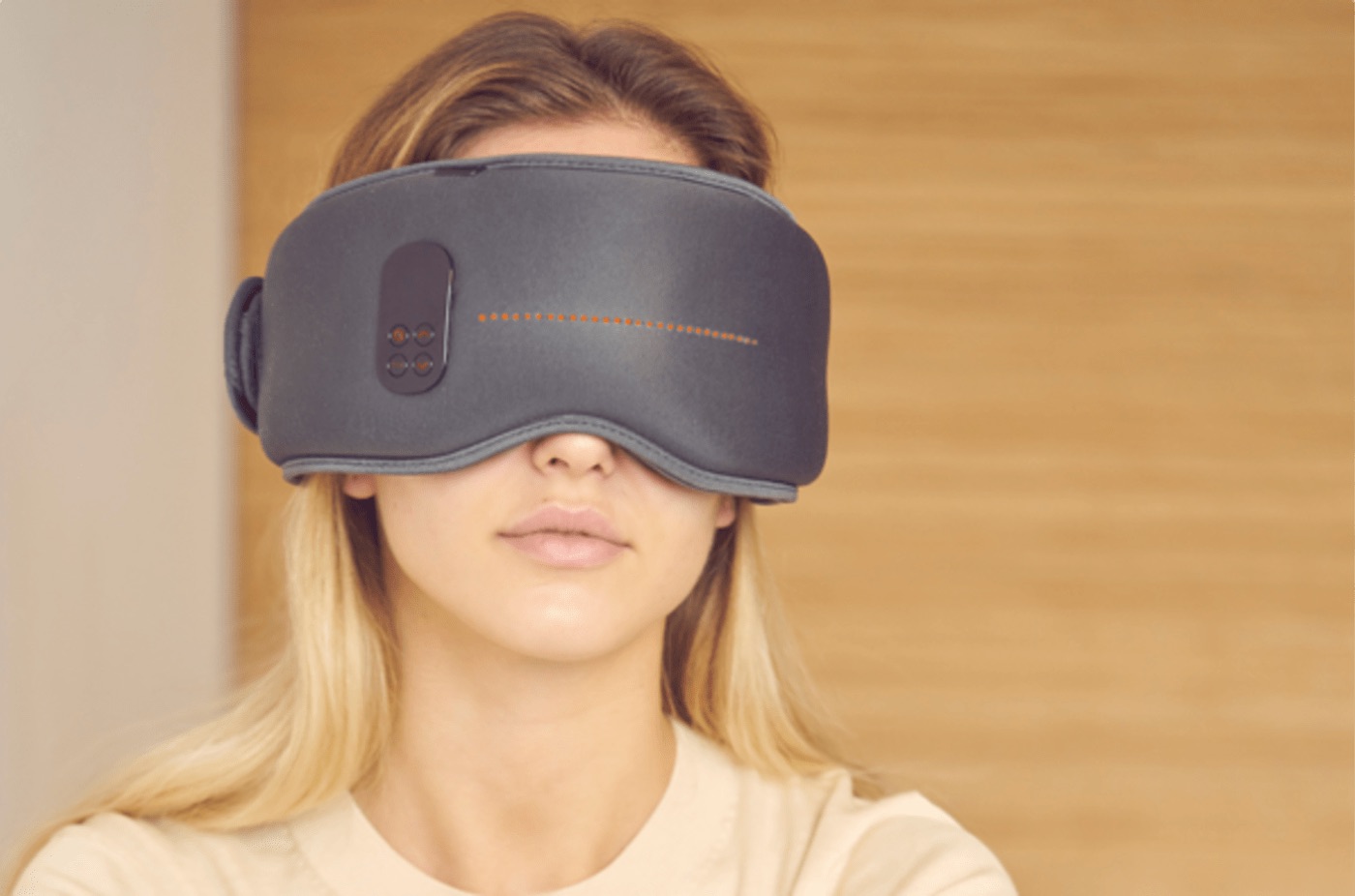
Sleep masks had already started branching into functionality: masks that light up gradually to wake you, masks with built-in low-frequency speakers. The high-profile example was Dreamlight at CES 2018 — a wrap-around mask with heart-rate monitors, accelerometers, gyroscopes, and four speakers.
On the physiology side: body temperature fluctuates through the night and the body regulates heat less effectively during sleep, which is why the sleeping environment's temperature matters so much for REM quality. The forehead is one of the best non-invasive sites for a reading.
Solution
Install thermal and push sensors inside a sleep mask to create a perpetual, non-invasive thermal monitor.
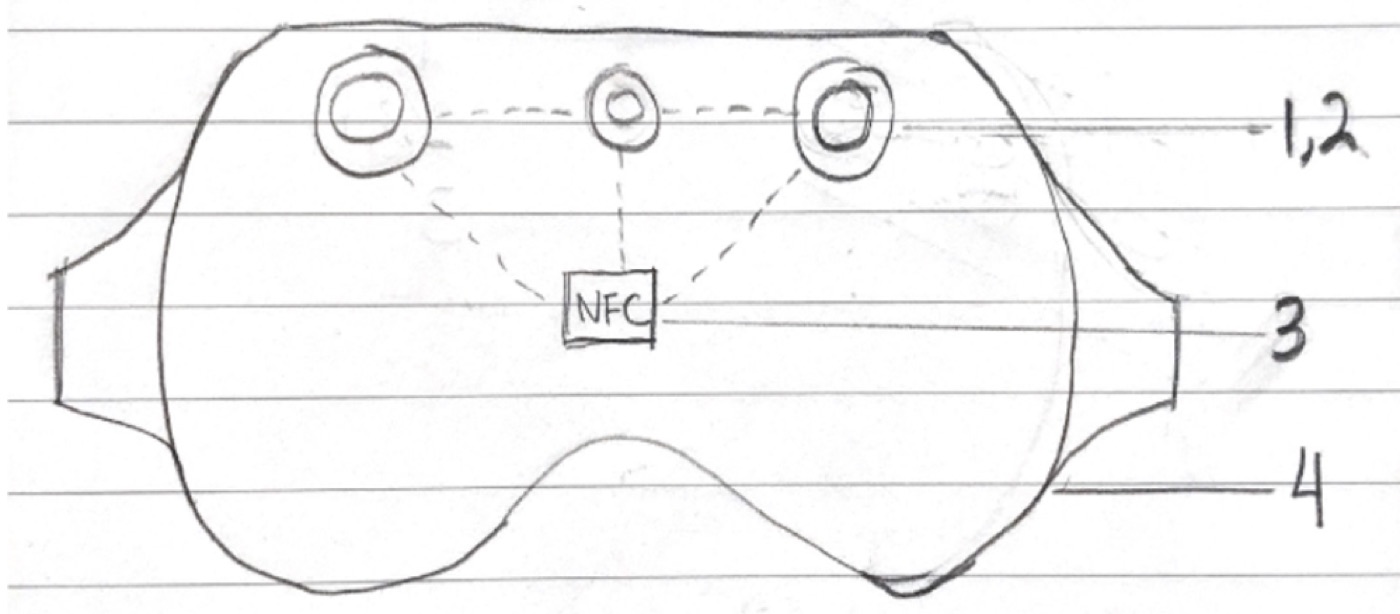
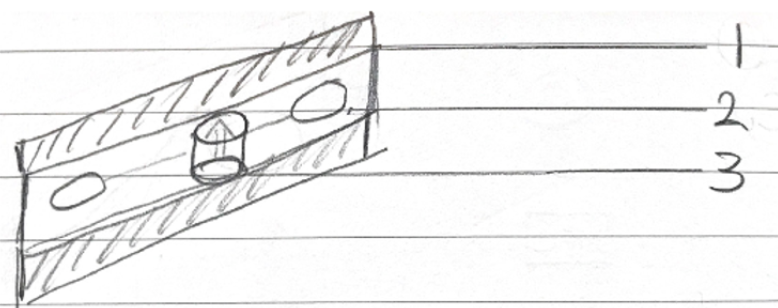
- Thermal sensors near the forehead for the best telemetry.
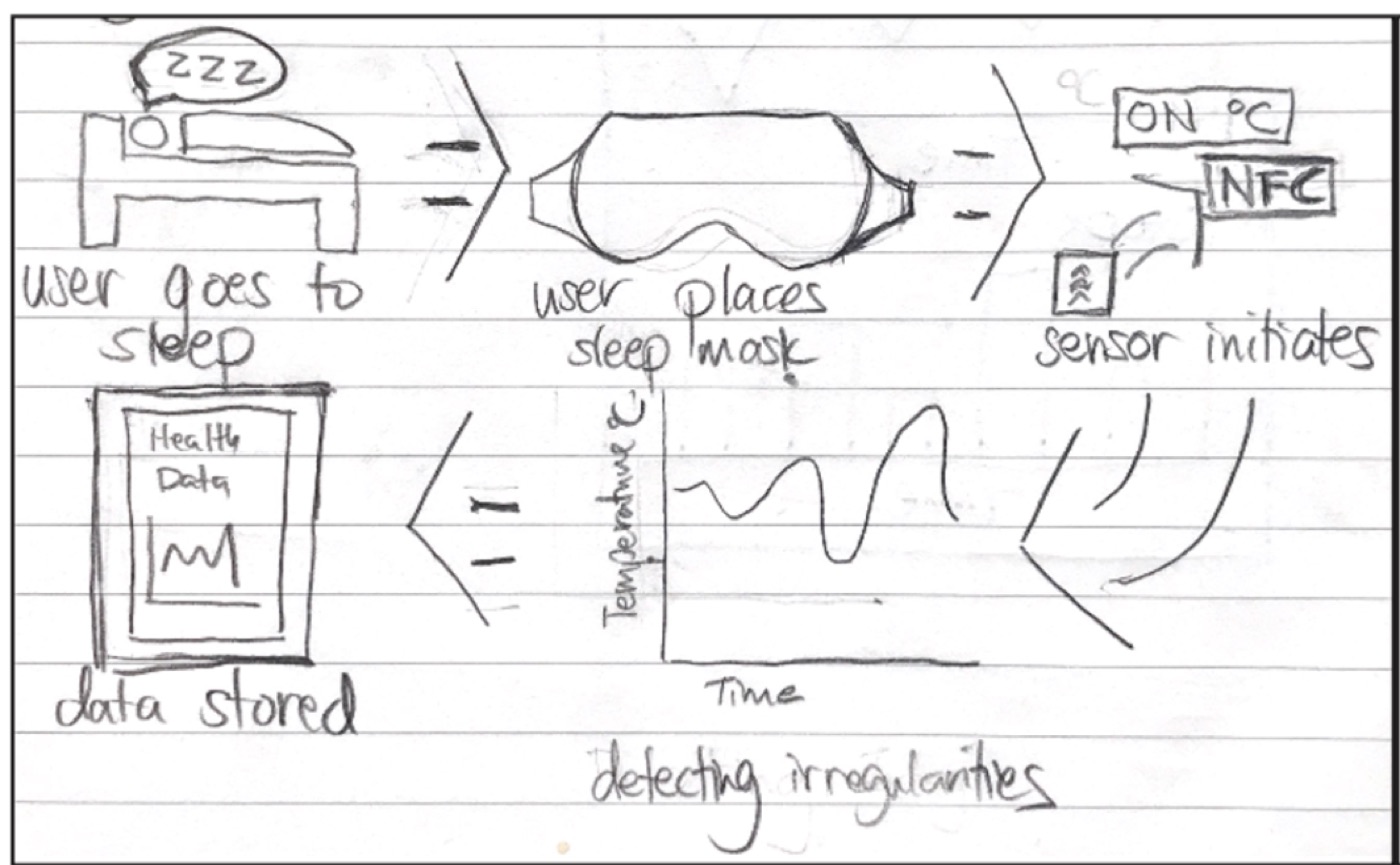
- Push sensor as the initiator — putting the mask on wakes the system, taking it off shuts it down to save battery.
- NFC chip in the center to sync with the phone.
- App integration — third-party apps feed the device's native health app, so temperature sits alongside existing health data.
Limitations & next
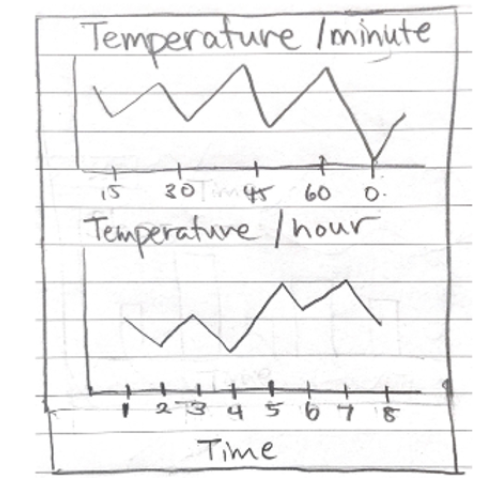
Both short and long sleep durations correlate with cardiovascular risk, and skin temperature correlates with blood-flow velocity — so a temperature trace is a richer signal than it looks. If PTM could detect an incoming irregularity (machine learning in a future iteration), a subtle change to a sleep mask could have an outsized effect.
- Sensor overheating and long-term durability are open questions.
- Replacing a failed sensor means opening the whole mask — a cost and reuse problem.
- Battery life versus weight on the face.
- Infrared sensing of a facial region is worth exploring beyond contact thermal sensors.
- Market research is needed on who actually wants a smarter sleep mask.